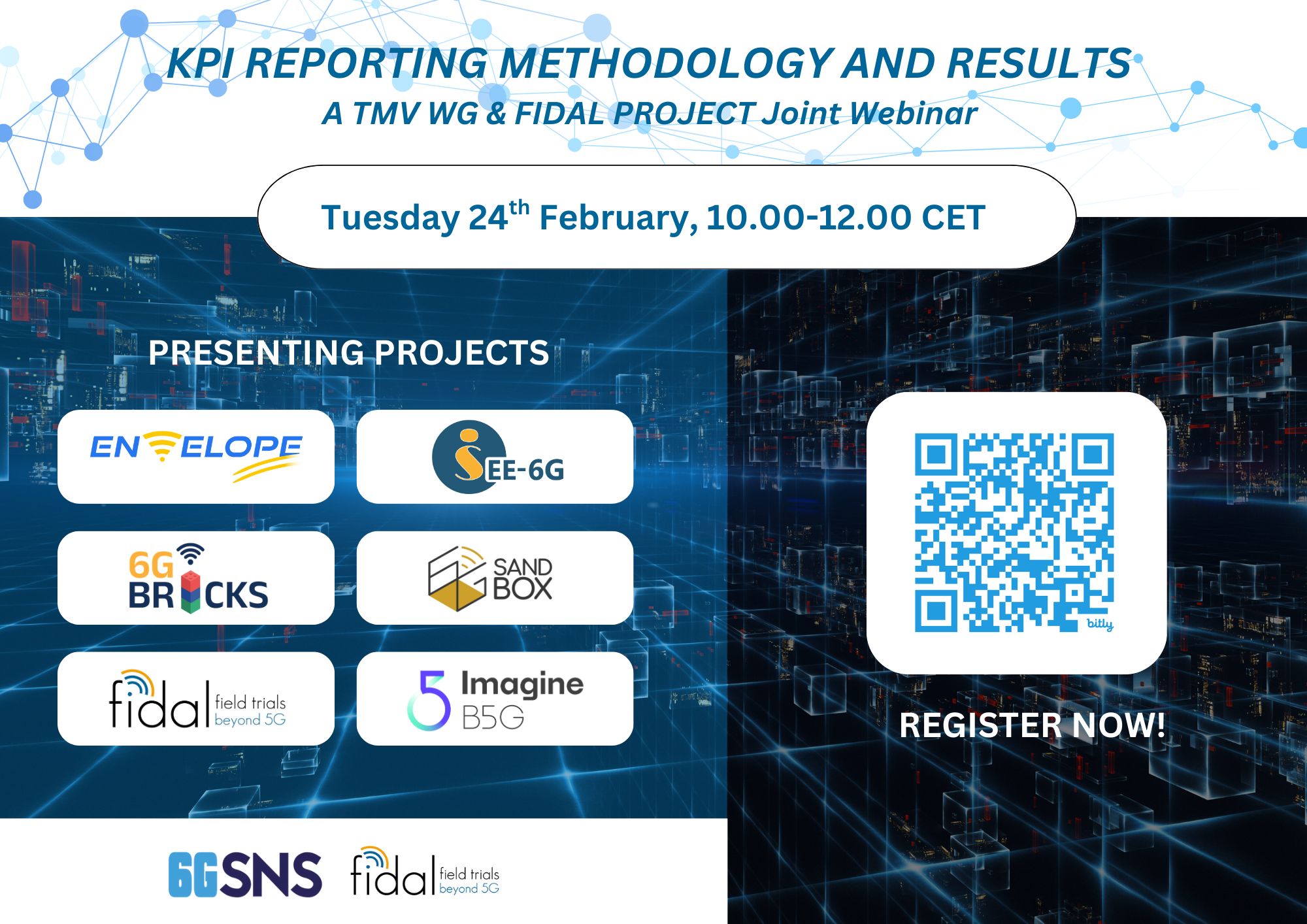
On 24 February 2026, Imagine-B5G participated in the KPI Reporting Methodology and Results Webinar, organised by the Smart Networks and Services Joint Undertaking (SNS JU) TMV Working Group, following the initiative of the FIDAL Project.
The session brought together several projects from the SNS portfolio to exchange experiences and approaches related to KPI definition, monitoring, harmonisation, and reporting across 5G and Beyond-5G research and large-scale trials.
Imagine-B5G’s Contribution
Representing the project, Matteo Pagin, from Keysight Technologies, presented Imagine-B5G’s methodology for KPI reporting within the context of large-scale, open 5G experimentation.
The presentation outlined:
- The structured approach adopted by Imagine-B5G to define and monitor Key Performance Indicators across diverse trial environments
- The methodology used to collect, validate, and consolidate KPI results from multiple facilities and vertical use cases
- Practical insights gained from implementing KPI monitoring in real-life Beyond-5G experimentation scenarios
Given the project’s role as an advanced open 5G platform supporting large-scale trials and pilots across Europe, KPI reporting plays a central role in ensuring measurable impact, transparency, and comparability of results.
Aligning with the SNS Ecosystem
The webinar also showcased contributions from other SNS projects, including:
The discussion highlighted both common challenges and complementary methodologies across projects, particularly in areas such as KPI harmonisation, validation consistency, and performance assessment across heterogeneous infrastructures.
For Imagine-B5G, participation in this joint session reinforces the project’s commitment to contributing to coordinated evaluation practices within the SNS ecosystem and to ensuring that results from its open calls and funded third-party experiments are assessed through clear, structured, and reproducible methodologies.
The consortium thanks the SNS JU TMV Working Group and the FIDAL Project for organising this important knowledge-exchange session and looks forward to continued collaboration in shaping harmonised evaluation frameworks for next-generation networks.
Recent Comments